Showing posts with label Foot. Show all posts

Friday, 19 October 2012

How to Care for Your Feet and Toenails

How to Care for Your Feet and Toenails

How to Care for Your Feet and Toenails
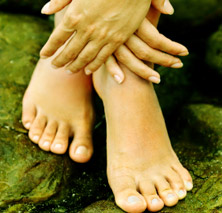
Your feet are two of the most abused often used parts of the body, what with all the walking and running that you do everyday. This being said, you should make sure to give your feet the attention and care they deserve every so often. Taking good care of your feet will prevent you from getting foot conditions such as Athlete's foot or other fungal infections. No matter what the season is, it is always important to keep your feet and toenails in tip-top condition. During the hotter months, for example, your feet are constantly visible due to footwear choices such as sandals and slippers, so it would be a good idea to keep them looking fabulous and presentable. But even during the winter months when you feet are bundled up in socks and boots, it would still be advisable to take extra measures in keeping your feet well-cared for. Some of these feet and toenail care tips are applicable not only to women, but to men as well. Don't overlook the advantages of having nice-looking and cared-for feet

Here are some useful steps in taking care of your feet and toenails, which will get you to putting your best feet forward -- literally -- in no time.

STEPS

1) Make sure to wash your feet daily. With all the running about from place to place that most people do everyday, the feet would have been exposed to a lot of dust and dirt by the end of the day. If you take showers in the morning and not at night, at least make feet-washing a part of your nightly routine when you get home. Lather up with soap, and pay extra attention to the spaces in between the toes. Wipe the feet gently with a towel afterward. Aside from being a mark of good hygiene, doing this would also ensure that you do not step onto your bed with dirty feet, and thus prevent from bringing dirt to your place of rest and relaxation.

How to Care for Your Feet and Toenails


2) Give your feet a pedicure every two weeks. Painting them does not necessarily have to be part of every pedicure routine, but regular pedicures really make a difference in keeping your feet soft and free from dry and rough skin, and your toenails clean and neat. You don't need to spend a lot of cash to have your pedicure professionally done in a salon, and with a few tools, you can do your own pedicure right in the comforts of your own home. Here's how to do one:


How to Care for Your Feet and Toenails
  • Soak your feet for about 5-10 minutes in a large bowl with lukewarm water. As an added treat, you may also wish to infuse the water with a few drops of essential oils or Dead Sea salts, to keep the feet smelling good and to soften hard skin respectively. The soaking time indicated here is merely just a suggestion -- you may choose to soak your feet for much longer if you want to relax, or if the hardened skin on your feet need extra hydration.
  • Exfoliate your feet with a foot scrub to slough off dry and dead skin, and to moisturize your feet as well. Massage the scrub in circular motions, and rinse off afterward. To exfoliate the hardened skin on the heels and bottom part of the feet, use a foot file or a pumice stone. Make sure to use a gentle filing motion, and to never rub too hard.
  • Cut your toenails straight across, as opposed to a curved shape, to prevent ingrown toenails from occurring. If you would really prefer a rounded shape instead of a straight square, use a nail file to smooth-en the ridges and to give the edges a bit of a curve, so you would end up with a square shape with rounded edges. Ensure that the nails are cut and filed to just the right length -- short, but not too much that you end up hurting yourself.
  • Remember to include your cuticles too. Apply cuticle oil to your toenails to soften and moisturize the hardened edges, and push the cuticles back with an orange-wood stick to create a smooth, open area ready for your polish. Make sure that you do not push too hard, or you might risk cutting the
3) If desired, apply polish to your toenails. Do this after you have done your pedicure, so that you have a smooth, clean base for the polish to go on to.

How to Care for Your Feet and Toenails

  • Before painting, clean the nail plates by wiping over them with nail polish remover. This removes excess oils as well as old polish from the nails, so your new colour will go on smoothly and last well.
  • Use toe separators to keep your toes apart. This makes the process of painting easier, and prevents a freshly painted toenail from staining another toe.
  • Always use a base-coat - a clear layer of polish - under your colour to prevent staining and to ensure your polish goes on smoothly.
  • Using the nail color of your choice, apply the polish to your toenails. Try to follow the "three stroke method", which consists of using one stroke on each side and a stroke in the middle. This ensures that the polish is evenly applied on the whole nail. Apply two coats of polish to your toenails.
  • After around 10 minutes, use a topcoat to achieve the smoothest, longest lasting results and a high-shine finish.
How to Care for Your Feet and Toenails
  • For fall, choose browns, oranges, and reds. Dark green also looks good.
  • For winter, try not to go too festive. For December, either go with red or dark green, but not both. Other colours for winter include dark blue and white. You can really use any colour though because your feet are not seen a lot.
  • For spring, bring out the pastel colours Soft greens, pinks, purples, and blues are a great touch!
  • For summer, use bright natural colours Other colours that work are light blue, turquoise, yellow, and white. If you have naturally fair skin and like to tan, coral accentuates it nicely.
  • If you can't decide on a colour, remember that a French polish (nude or pale pink polish with white tips) suits everyone and goes with all colours of clothing and skin. But feel free to be bold with toenail colours -- on the fingernails, some colours can look garish and tacky, but on the toenails, pretty much anything goes!
5) Moisturize your feet everyday. Put lotion or foot cream on as a part of your routine. One way to achieve soft, moisturized feet is to rub on some lotion or petroleum jelly before bed, and slip on some socks. When you wake up in the morning, you'll find that your feet are very soft and are free from dryness! Just remember to never let the area between toes become over-moisturized, as this will cause fungus. 

How to Care for Your Feet and Toenails

TIPS

  • Always use an acetone-free nail polish remover, as acetone can dry the nails and the skin/cuticles.
  • If you don't have toenail separators for when applying nail polish, you may also use twisted tissue paper woven between the toes.
  • Use the tips of an orangewood stick wrapped in cotton and soaked in nail polish remover to help clean up small spills and polish "bleed" around the cuticle or on the skin around your toes.
  • When your healthy, glamorous feet are ready for the summer, show them off in some beautiful flip-flops, or cool sandals in a colour you like.
  • You can learn a lot from the professionals, so treat yourself to a pro pedicure when you 'need' it -- and ask questions and pay attention!

Warning

If you have diabetes, take extra care when exfoliating, cutting your toenails or when pushing back your cuticles during a pedicure. Make sure that you do not injure yourself to prevent the risk of any infection.

Things You'll Need

  • Large bowl
  • Towel
  • Essential oils
  • Dead Sea salt
  • Foot scrub
  • Foot file or pumice stone
  • Nail clipper
  • Nail file
  • Cuticle oil
  • Orangewood stick
  • Cotton balls
  • Nail polish remover
  • Nail polish colour of your choice, basecoat, and topcoat
  • Foot cream, lotion or petroleum jelly

Article Source: http://www.wikihow.com/Care-for-Your-Feet-and-Toenails

Friday, 5 October 2012

Care for Feet Every Step Of The Way

Care for Feet Every Step Of The Way

Foot Care Tips Help Prevent Complications of Diabetes

Care for Feet Every Step Of The Way
(ARA) - With winter just a few weeks away many people are starting to feel the itchy effects of dry skin, but for people with diabetes, dry skin is not simply a minor annoyance -- it may lead to more serious complications if not properly treated.


Severe dry skin may result in deep and painful cracks in the skin's surface, especially in the feet.


Approximately 60 percent of people with diabetes suffer from a complication called neuropathy, or nerve damage, and may not be able to feel those painful cracks on the soles of their feet. Left untreated, wounds may become infected and create greater complications.


More than 16 million Americans have diabetes, and each year more than 86,000 of them have amputations resulting from foot ulcers or chronic wounds, many of which begin as a small cut or blister.


Doctors estimate that nearly 50 percent of amputations may have been prevented through a combination of awareness, prevention and intervention.


"People with diabetes have the opportunity to significantly improve their condition by taking proactive measures to care for themselves," says Dr. Maria G. Dill, regional medical director for Curative Health Services and medical director at the Valley Baptist Wound Care Center in Harlingen, Texas. "Simple steps can be taken to prevent complications from arising."


The following preventive measures may help people avoid or minimize the severity of injuries, sores and infections to their feet:


Never walk barefoot.


Check feet every day for injury.


Wash feet daily in warm, soapy water.


Moisturize the soles of feet with unscented lotion immediately after bathing.


Avoid scented lotions, as they contain alcohol that may dry the feet.


Check shoes to make sure they are free of stones and sharp or lumpy objects, like a child's toy.


Wear loose socks in bed if feet are cold -- do not use hot water or heating pads to warm cold feet.


Make regular visits to a podiatrist.


Without proper treatment, injuries caused by neuropathy may become serious wound problems, resulting in chronic infections, gangrene and possibly amputation. More than 6 million people in the United States suffer from chronic wounds, which are commonly defined as wounds that show little or no improvement after four weeks of best practices, or do not progress toward healing in eight weeks. Curative Health Services (Nasdaq: CURE) operates a national network of more than 100 Wound Care Centers(R), which follow an interdisciplinary approach when treating patients suffering from chronic wounds. Nutrition, wound prevention, and education play key roles in all treatment plans. The program has healed more patients with chronic wounds than any other wound specialty program, and consistently averages a 90 percent patient satisfaction rate throughout the nation.


If non-healing foot ulcers occur, consult with a physician. For more information about foot care tips for people with diabetes or treatment for non-healing wounds, call the nearest Wound Care Center at (800) 991-HEAL (4325).


Monday, 5 March 2012

Best Heel Pain Treatment Options

Best Heel Pain Treatment Options


Best Heel Pain Treatment Options
Pain in the heel usually occurs due to excessive strain, or in certain cases, from a trauma to the heel. The first foot part that has interaction with the ground in the course of walking is the heel. It is the heel bone - or calcaneus - that is most disposed to stress when walking.
The structure in the foot that help stabilize the feet during walking are the foot arches, with the bone sin the midfoot compressed together with tendons and ligaments, and the muscle that is known as flexor digitorum brevis which holds up the arch. But when gait abnormalities cause the structures that are connected to the heel's bones to swell, become inflamed or tear, prolonged pain usually follows.
When the long and flat tissue along the bottom of the foot gets tears and becomes inflamed, it is termed plantar fasciitis. Plantar fasciitis is a painful, serious and progressing condition that may lead to full ruptures in the plantar fascia tissue in its most serious cases. Heel pain treatment for plantar fasciitis is straightforward, and low cost in most cases, however heel pain treatment for plantar fasciitis can take a long time. It is not unusual for plantar fasciitis heel pain treatment to last for 6 months to a year.
Pain and inflammation of the Achilles tendon could also cause heel pain - specifically pain in the back of the heel. This is usually due to Achilles tendonitis and the most noticeable symptom is pain when walking or running.
Another cause of acute pain in the heel of the foot could be the presence of heel spurs. Heel spurs are spurs of bone laid down due to inflammation. They can easily affect your daily activities, since they can create aching pain with each step. A sharp poking pain is usually what characterizes the pain that comes from a heel spur under the heel. Heel spurs may not be painful at all however, and they may require no treatment plan at all.
There are numerous heel pain treatment methods, and as long as the pain is not too severe as to lead to debilitation, you may use only the conventional methods to cure it. Staying away from high impact activities that may worsen the pain is the logical step to take. Ice is also known as an effective heel pain treatment, since it reduced swelling, and kills pain once put on the area. These simple procedures, along with wearing comfy footwear help to get rid of pain. In case the pain is more persistent, then orthotics may be required to improve foot function and spread out the body weight properly.
Another heel pain treatment method that has been proven efficacious in treating acute heel pain is ESWT (Extracorporeal Shock Wave Therapy). This technique can be applied in less than an hour, and patients are regularly able to restart their normal activities after a further 24 hours. If heel pain is caused by rheumatoid arthritis, by tarsal tunnel syndrome or by infections, ESWT can't treat it. In addition, it cannot be applied on people who frequently take medicines such as heparin or patients with certain medical conditions. A doctor will be able to advise you on this heel pain treatment method, and will suggest the best heel pain treatment plan based on the condition you have, and its severity.
In case not a single one of those treatment techniques is effective, the sufferer may have to go through conformist operation, where either the plantar fascia is released, or the heel spur or bursa is removed.
Jane Rivero writes on personal wellness, and appreciates how bad foot pain can be. She recommends visiting a podiatrist or doctor to get to the bottom of the problem, and to ensure that the correct heel pain treatment regimen is started promptly. Effective pain treatment options are numerous, but not all will work with everyone. It may take a little trial and error to get the one which is right for you.

Are Those Really Corns on Your Feet?

Are Those Really Corns on Your Feet?


Are Those Really Corns on Your Feet?
There are several conditions that affect the feet that are very similar. You may think you have foot corns, for example, but in fact you may have foot calluses. So how do you know for sure? Well, while they may be similar from some points of view, they all have their specific traits that differentiates them from one another.

But first of all, let's see what corns on feet are and how they manifest. Foot corns are usually thickened areas of skin which are caused by applying too much pressure on the foot. Shoes usually apply pressure on the top of the foot, thus the toes are more likely to develop foot corns, as well as the under the ball of the foot or between the toes. They cause much discomfort and are painful and unsightly.
Compared to foot calluses, corns are quite different. Corns on feet are spherically shaped calluses of dead skin. Foot calluses are also areas where the skin has become toughened and thick and hard. Calluses tend to be flatter, thicker and far more extensive. They may cover the whole of the ball of the foot. In fact, you may have a callus, and have a corn on top of it!
Callused skin on the feet comes as a result of repeated friction, pressure or other irritations. The most frequent cause for their appearance is poor foot mechanics or badly fitting shoes. While corns on feet usually appear on the upper side of the foot, calluses develop on the sole of the foot, especially where the first metatarsal bone joins the big toe, but also on the heel. They are generally not harmful and don't hurt as much as foot corns, but they can be more dangerous; as skin ulceration and infections may appear.
Corns appear as a thickening of the skin on the toes. This thickening appears as a cone-shaped mass pointing down into the skin. A corn can occur over a callus or be surrounded by calluses. It has been observed that a corn is a thicker and more focal area, while foot calluses are more diffuse thickenings of the skin.
A common cause that leads to the formation of corns and calluses are hammertoes. A hammertoe is a condition resulting from keeping the toes tight and bunched up for a long period of time. Most frequently, they result from wearing inappropriate footwear or from foot abnormalities. Tight shoes force the toes to bend and keep them in that bent position for a long period of time. This causes toe muscles to shorten, which results in the toe having the appearance of a hammer. Thus the name "hammertoes". Because the toes are bent upward, they are prone to developing foot corns and calluses.
Both corns on feet and foot calluses are normal and natural ways in which the body protects itself. Both calluses and corns may go away by themselves eventually, but if you want to get rid of them more quickly, there are some treatment options worthy to be taken into consideration. These include using a callus shaver, salicylic acid treatments, alcohol free Goldenseal extract, medicated pads among others. Remember that tight-fitting shoes though are best avoided.
Jane Rivero writes on foot health and personal wellness. She recommends getting corns on feet checked by a podiatrist, as if the root cause is not found they will return time and time again. If you want to find out why you get foot corns and what you can do to stop them, a trip to the podiatrist is the best bet.


Athletes Foot - What Is It All About?

Athletes Foot - What Is It All About?


Athletes Foot - What Is It All About?
Athlete's foot was first discovered early in the 19th century. Initially the belief at the time was that it was caused by bug bites. This belief was proven to be untrue. Dermatophytes are the primary cause of athlete's foot. Dermatophytes were discovered in the 19th century. Dermatophytes affect the top layer of skin. It goes by different names such as microorganism, fungus, dermatophyte, ringworm and tinea. A fungus can live off the skin of the body. Dermatophytes in the case of athlete's foot affects the skin of the feet.

Tinea is a skin problem that affects people at least once in their lifetime. Tinea is a parasitic fungal infection. Tinea can grow on different parts of the body. It can develop on the feet, groin, scalp, face, nails, and hands. Tinea cruris is also called jock itch. Jock itch is a common growth in the groin area. Tinea can be extremely itchy.

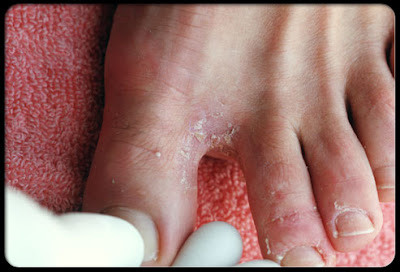
Athlete's foot may appear differently for different people. The skin can be dry and scaly affecting the area between the toes and the sole of the foot. Athlete's foot can start out as a rash and progress to blisters. This fungal disease can appear as a whiteish yellow rash with bright red blisters. The toenails may be infected. The skin may become sensitive to touch, there may be a burning sensation. The feet may have a bad odour. The feet may have a watery discharge.

Preventing tinea is easy. When showering in public gyms always wear water sandals to avoid coming into contact with the fungus. The foot fungus grows in wet hot areas. Give your feet a chance to breath by wearing another pair of sandals at home. Do not share towels. Change socks frequently.

When animals such as cats and dogs acquire athlete's foot it is called ringworm. Human beings can get athlete's foot from animals.

There are many different remedies for the different types of tinea. It is important to develop a treatment plan and stick to it. Feet should be kept dry and clean. There are different topical applications for tinea. They come in creams, sprays or powders. There are also athlete's foot home remedies. Tea tree oil is a popular home remedy. A mixture of apple cider vinegar with water is a common natural treatment. Whatever treatment you choose stick to the routine for a couple of months to ensure the fungus is completely gone.


The Science of Orthotics

The Science of Orthotics

Foot Deformities I Foot Orthotics
If you ever had a broken arm or knee, chances or you have heard of the word Orthotics because you had to use them. However, even if you've never had a broken limb before, you can still benefit from it. Orthotics is a medical specialty that focuses on designing and creating a device that provides support for the bones and muscles to either aid or limit movement.
Who benefits from orthotics? There are many, actually; not only people who have had broken limbs can make use of it. Those who utilize orthotics are:

- Those that have intense back problems that cause their spine to bend, such as scoliosis and osteoporosis;

- Those that cannot maintain proper posture due to cerebral palsy, spinal cord injuries and stroke;

- Those that sustained arm, elbow and hand fractures;

- Those that have peripheral neuropathy, multiple sclerosis, polio, arthritis and other sickness that causes weakness in their lower limbs;

- People who have foot deformities; and

- Athletes that want to improve their gait and balance.

Foot orthotics is the most popular branch of this field because people with or without muscular and skeletal problems can use them. This branch itself can be divided into two types: the functional orthotics and accommodative orthotics.
Activities such as walking and running are important in maintaining a healthy lifestyle because these are cardio exercises that improve blood flow and strengthen muscles. However, these simple activities can be detrimental for those with foot deformities. Also, those who experience too much strain on their legs and feet would have problem with these activities as well. Not only are the heels, ankles and legs the parts of the body that receive the strain, but also lower back. Improper movement of the feet is like a wave that affects the entire body. Some people with foot deformities complain that even their lower back, their hips and their shoulders ache from simply walking!
To reduce the strain and soreness on feet, foot inserts are often recommended. As mentioned previously, foot orthotics helps maintain balance and help reduce the stress on feet. When shoe inserts are used, the person will feel less strain and more comfort. That person will also notice that his balance is improved so there is less tendency of having ankle problems.
Many athletes use shoe inserts because they experience 300% to 400% more strain than anyone doing normal foot activities and are therefore more prone to foot injuries. The improved balance that these inserts provide also helps them maximize their skills and potential when playing their sport, may it be basketball, baseball, lawn tennis and more. These inserts also have shock absorbing properties, minimizing the pressure and shock that the heel has to take when playing.
Foot orthotics is also highly recommended for children with foot deformities. These should be utilized while they are young so that they will adjust to it as time goes by. The child will have lesser chances of twisting his ankle or falling to the ground.
Read more about foot orthotics by visiting WalkFit Platinum


Foot Surgery - How to Survive With Both Your Spirits And Your Sanity Intact


Foot Surgery - How to Survive With Both Your Spirits And Your Sanity Intact
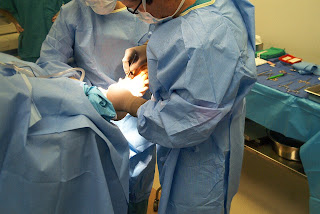
It was a difficult decision, but you've decided to no longer put up with the pain, irritation, and deformity of a bunion or hammer toe. In my case, it was a severe bunion, with my big toe drifting aggressively towards my other toes, which informed my decision towards major foot surgery. My husband had undergone bunion surgery more than ten years earlier, and this trying experience, both for him as patient and myself as caregiver, had cautioned us both to plan ahead.The devil is, indeed, in the details. Knowing that you'll be off of your feet for at least three weeks, and walking with limited mobility in a surgical shoe or boot for as long as eight weeks, takes strategic planning. It's easy to remember to gather books, DVDs, and magazines in advance of your surgery, but there's much more that can be done to make your confinement a stress-free experience.
  • Contact your doctor's office, and pick up prescriptions in advance for any medications or devices, such as crutches, that you'll need. Your doctor may also be able to sign a form for a temporary handicapped parking placard.

  • Most insurance won't cover crutches or other assistance devices until two days before your surgery. Be sure you know what your insurance will cover, and when and where you'll need to pick up materials. A rolling scooter called a knee-walker, such as a Roll-About, is a life-saver and will give you more stability than crutches. Knee-walkers may be rented at your local medical supply company, or on-line.

  • Freeze ice packs in advance. Icing, even weeks after your surgery, will help keep down foot swelling. A small cooler by your bed filled with ice packs will allow you to change them frequently right after surgery. A handy way to keep the ice packs on your foot is to secure them with a long Ace bandage.

  • Even after your stitches come out, you'll want to put a dressing on your scar to minimize irritation. Purchase gauze pads, surgical tape and stretchy "tender tape" in advance.

  • Your doctor may recommend purchasing a compression sock to minimize swelling. You can also use a tight Ace bandage or purchase an inexpensive forefoot compression sleeve at http://www.therawear.com/foot-and-lower-body-health.html?brand=120&cat=31 . Be aware that you'll also need a big, loose sock to slip over your swollen foot. My husband's wool tube socks were perfect.

  • Your foot will need to be elevated as much as possible during your entire recovery. I was given a handy foam block at the hospital. Have pillows at the ready, or purchase a foam block, about 5" in height, from a craft store.

  • Place a small table by your bedside. Have anything you may need within arm's reach, such as a water bottle, lip balm, TV remote, telephone, and medications. Another similar table or tray by your couch is useful. A 4-legged cane with a curved handle placed by the bed can act as a bed-rail, and will assist with getting in and out of bed during the first weeks after surgery.

  • Stock up on easy-to-prepare meals, such as frozen foods that can be popped in the microwave. Even after you can walk, a trip to the grocery store will be impractical. Have lots of bottled water on hand.

  • Catch up on your laundry. Laundry baskets will be hard to handle, and if your washer and dryer are located in your basement, it will be weeks until you can manage a wash. Inventory and launder casual clothes in advance, and be sure you have a few pairs of wide-legged pants that can be slipped over your surgical boot.

  • You are at your most vulnerable when bathing. Your doctor may allow you to get your foot wet as soon as a week after surgery, even with the stitches still in, so your foot will still be very tender and unable to bear weight. You'll want to have the following for a safe bathing experience:

  • Shower stool

  • Sprayer shower-head

  • Grab-bars around the tub

  • Shower gel and wash cloths (rather than soap)

  • Large plastic bags (if your doctor recommends keeping your foot dry)

  • You'll want to have a comfy, easy to slip on shoe that is close to the height of your surgical boot. Since your foot will be elevated much of the time, you'll also want a comfortable slipper for your non-surgical foot. I found that most of my shoes were the wrong height, so www.zappos.com was a convenient way to shoe-shop while confined.

  • Will you need to navigate stairs? Using crutches is dangerous - until you can walk in your boot, it's better to find an alternative method. I went up and down on my butt; my husband used construction knee-pads and went up the stair on his knees. Plan a strategy and practice in advance.
The final, and most important question, is how to keep your spirits up during a long recovery. Make a list of projects that can be done while you're home and on the couch - photos that you've meant to organize, books and movies that you've planned to catch up on, the computer game that you've never had time to learn. Gather your project supplies in advance of your surgery. Think of this time of healing not as a forced confinement, but as a period of rest and relaxation. Advanced planning will not only be easier on you, but on your caregiver as well.
Joan Elmouchi is a librarian who lives outside of Detroit, Michigan. She is the author of the Travel Guide "Beach Freaks' Guide to Michigan's Best Beaches", published by Glovebox Guidebooks. Joan is a board member and past-president of the prestigious Metro-Detroit Book & Author Society, past-president of the Women's National Book Association, and a member of the writer's groups OWWL and First Draft Writers.


Share

Twitter Delicious Facebook Digg Stumbleupon Favorites More